
Your Old Google Home Mini Could Be a Local Voice Assistant. So Could That Echo Dot
A no-solder board that swaps the guts of a first-gen Google Home Mini for an open, local Home Assistant voice satellite raised 16 times its goal. Here's what it is, what it costs next to Voice PE, and the Echo projects doing the same thing.
Your Old Google Home Mini Could Be a Local Voice Assistant. So Could That Echo Dot
A lot of us have a first-generation Google Home Mini or an old Echo Dot in a drawer. They still work, mostly. But the companies behind them keep changing what older speakers can do, and the more you care about local control, the less you want a cloud microphone in the kitchen.
There's now a real, practical way to keep the hardware and replace the brains.
MiciMike: a new mainboard for the Home Mini
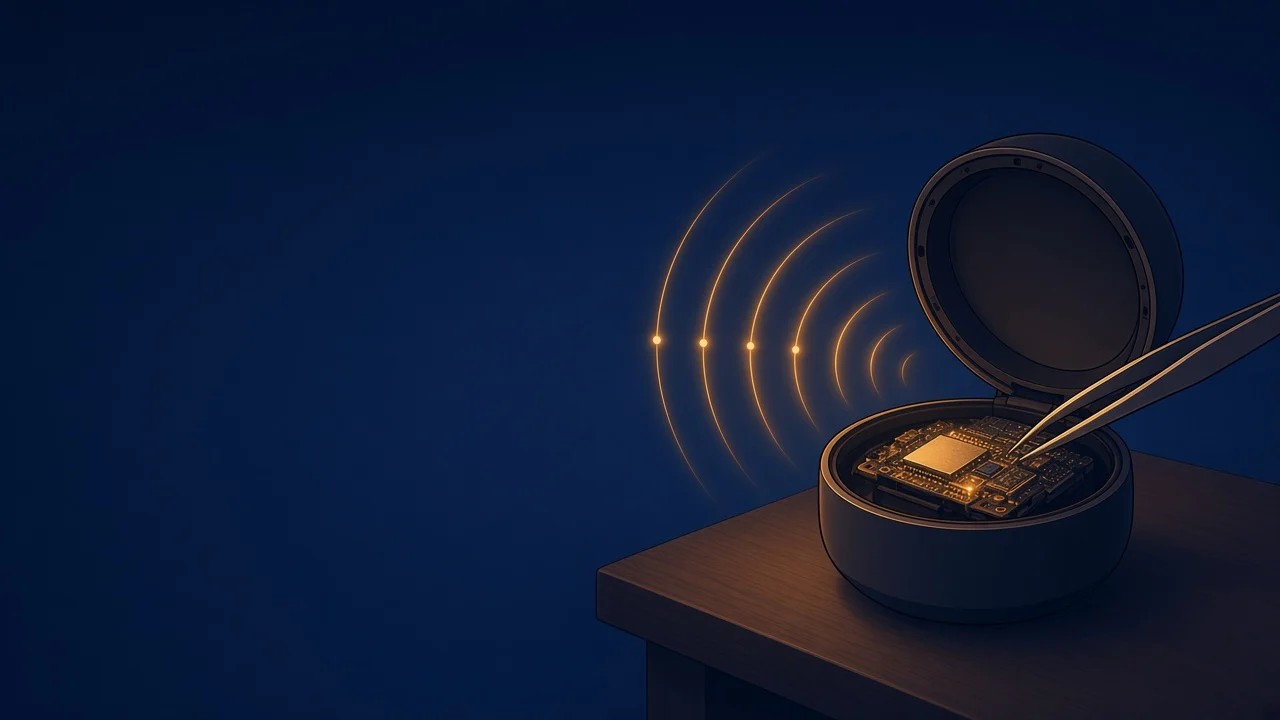
MiciMike, from MiciMike ReV Devices in County Cork, Ireland, is a drop-in circuit board for the first-gen Google Home Mini. The pitch: it "replaces the original mainboard of a Google Home Mini (1st generation) with a fully open, privacy-respecting alternative — no case modifications, no soldering, no compromises."
So the idea is you open the Mini, take out Google's board, put this one in, and close it up. Same case on the shelf, now running as a local voice assistant for Home Assistant.
The hardware is the interesting part. It's built around an ESP32-S3 and an XMOS XU316 audio processor, "the same combination used in the official Home Assistant Voice Preview Edition." That matters because it's the same audio front end Home Assistant's own voice hardware uses, not a one-off design. Per the campaign page, it also has:
- 8 MB PSRAM and 16 MB flash on the ESP32-S3
- On-device wake word detection with microWakeWord
- Music Assistant and Sendspin support
- Open hardware under the CERN-OHL-S v2 license
- A hardware mute that "physically disconnects the microphones — not a software flag"
That last one is my favorite line on the page. On a privacy device, the mute switch should be a switch.
The numbers
People wanted this. The campaign asked for $8,000 and, as of October 23, showed $132,614 from 654 backers, which the page calls "1,657 % Funded!" The Open Home Foundation's October newsletter put it nicely: asking for $8,000 "and ending up with 16 times that."
It's still available for pre-order, and the page says "Orders placed now ship Jan 08, 2027."
Now the cost. The campaign page's own comparison table puts MiciMike at "$85" total estimated cost, against "$59" for Home Assistant Voice Preview Edition. So this isn't the cheap way into local voice. Voice PE is cheaper. What MiciMike gets you is a device that looks like a normal smart speaker, reuses hardware you already own, and keeps one more gadget out of a landfill. Whether that's worth the difference is your call. For a living room where the Mini already sits, I'd probably pay it.
One more practical note: CE, UKCA and RCM certification for Europe, the UK and Australia are listed as "currently in progress." If you're outside the U.S., check that before you count on it.
The Echo side
The OHF newsletter, "How to take back your voice," rounds up community projects doing the same thing for Amazon hardware. From their list:
- LocalDot: an open mainboard for the 3rd-gen Echo Dot, "Launching soon on Crowd Supply."
- Kiosk Satellite: turns a 2nd-gen Echo Dot into an intercom.
- EchoMuse: a 2nd-gen Echo Dot as a local assistant and music player.
- overdub: hands the Dot's action button to Home Assistant while Alexa keeps running. That's a nice halfway step if you're not ready to drop Alexa.
- TECHO5: goes the furthest. The newsletter describes it as hacking "the Echo Show's whole operating system" to make it "a local Home Assistant voice satellite, touchscreen and all."
There's also an Echo project comparison tool by HuskerMinion, linked from the newsletter, for figuring out which project fits which device. And the newsletter teased an Apollo Automation speaker dock for Voice Preview Edition, with no details beyond a sneak peek.
These range from "swap a board" to "replace the operating system," so the effort varies a lot. Start with the newsletter and follow the links for your exact Echo generation.
What you need on the Home Assistant side
A new mainboard only handles the listening part. Home Assistant still has to turn speech into text, figure out what you meant, and talk back. If you haven't built that yet, I covered two ways to do it locally: a CPU-only Whisper and Piper setup in Docker, and a local LLM voice build on a 16 GB GPU for people who want it to handle more than simple commands.
Get that pipeline working first with a phone or browser. Then the speaker is the last piece, not the first problem.
My take
The reason this took off isn't that people love soldering-free circuit boards. It's that a lot of people bought smart speakers years ago, and the deal changed under them. Projects like MiciMike and LocalDot are the fix that keeps the hardware and drops the cloud dependency. I'm glad they exist, and I'm glad they reuse what's already on the shelf.
Permalink: https://homeautomationweekly.com/issues/37-old-smart-speaker-home-assistant-voice